


Bella: Anime Characters Chat
3.9409.00 Reviews
App Specs
- Version
- 1.0.4
- Updated On
- License
- Free
- Downloads
- 100,000+
- Developer
- APPS4FREEZ
- Categories
- Entertainment
- Platform
- Android
Screenshots
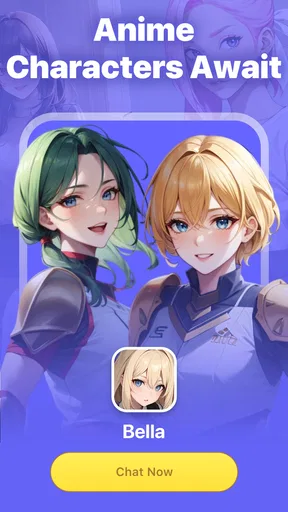
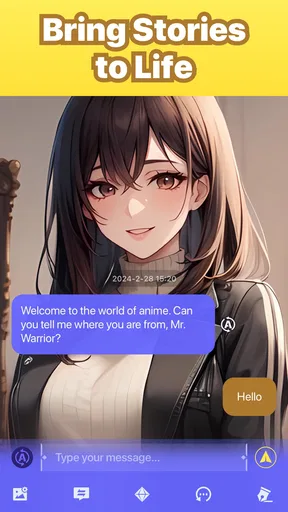

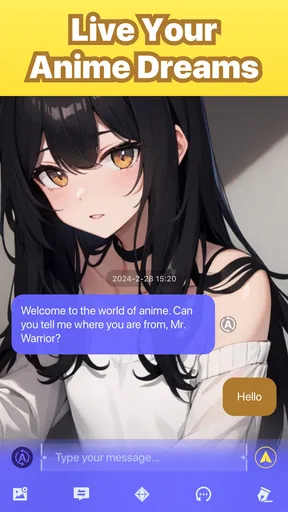
 Analysis by AppCompare
I approached Bella: Anime Characters Chat as an entertainment app built around one central idea: talking with anime-style companions and letting those conversations develop into personal storylines. That focus makes it different from a standard character gallery or a traditional anime game. Instead of watching a fixed plot unfold, I take part in the direction of the exchange, deciding what to ask, how to respond, and what kind of mood I want the conversation to have.
My first impression was that Bella is easiest to understand when treated as a casual creative space rather than a replacement for a full anime series. It is published by APPS4FREEZ, offered free to install, and listed for mature users aged 17 and above. The app belongs to the entertainment category, and its audience is fairly established, with more than a hundred thousand installs and an average rating of 3.9 from roughly 2.6 thousand ratings.
The appeal is not really about completing levels or collecting conventional rewards. It is about seeing whether an interactive character can keep a conversation interesting enough for me to return and continue a scenario. That makes the quality of my prompts important. A vague opening tends to produce a shallow exchange, while a clear role, setting, or conflict gives the conversation more direction. The strongest results come when I treat the chat as collaborative storytelling instead of ordinary messaging.
Why the anime companion concept matters
The verified capability at the heart of Bella is the ability to chat with anime companions while creating individual storylines. In practical terms, that shifts the user’s role from spectator to participant. I am not simply reading dialogue written in advance; I am testing how the conversation develops when I introduce a new idea, change the emotional tone, or place the character in a different situation.
This format can be surprisingly useful for short bursts of entertainment. I can open the app with only a general idea, such as wanting a light conversation, a dramatic scene, or a playful exchange, and then build from the character’s replies. It feels closer to improvisation than to watching a show. The story is not valuable because it has a fixed ending; it is valuable when the interaction gives me enough material to keep imagining what happens next.
That distinction also explains why Bella will not suit everyone. Someone looking for a polished anime narrative with carefully timed reveals may prefer a visual novel, a streaming service, or a conventional story-driven game. Bella is more open-ended, but openness also means the user has to contribute more. If I enter without any idea of what I want from the conversation, the experience can feel less focused than a scripted alternative.
I found that the app’s best use is not trying to force one conversation to become an epic saga immediately. Short, specific scenes work better. A simple setup such as two characters meeting after a misunderstanding gives me a clear starting point and leaves room for the exchange to grow. If I ask for too many developments at once, the storyline can lose its sense of pace because there is no single event for the conversation to build around.
Worth Reading Before You Choose

EA SPORTS FC Mobile 26 Is a Bigger Football Game, but It Takes Time

Flipboard Shows What News Apps Must Do Beyond the Feed

Switching to Android Auto Means Rethinking Your Driving Routine

Google Calendar Makes a Crowded Week Easier to Manage

Ludo King Makes the Most of the Minutes Between Plans

Baby Panda World Brings Quick Play to Modern Phones, but Its Game Library Feels Busy
Turning a chat into a scene
A useful approach is to establish three things early: where the scene takes place, what the character wants, and what problem is preventing an easy resolution. For example, I might frame a conversation around a late-night train station, a character who is hiding an important message, and a reason they do not trust me yet. That structure gives the companion something more concrete to react to than a sequence of unrelated questions.
I also get better continuity when I make one decision at a time. Rather than writing a long paragraph that includes a location change, a new character, a sudden confession, and a fight, I introduce one turn and allow the reply to shape the next. This makes the exchange feel more natural and gives me a clearer sense of whether the companion is responding to the story or merely following isolated prompts.
Another practical tip is to decide whether I am speaking as myself or as a fictional role. Switching between those modes without warning can make a storyline feel inconsistent. When I remain in character, I can use the chat as a small role-playing exercise. When I speak as myself, the interaction feels more like a relaxed companion conversation. Both approaches can work, but choosing one at the beginning reduces confusion.
The app’s short store description is simply “Bella,” which does not explain much about the experience. After using it, I would describe the real value more precisely: it is a conversation-led entertainment tool where the user supplies much of the creative energy. That is important for expectations. The app does not become compelling merely because an anime-themed character is present; the quality depends on how well the chosen premise and follow-up messages support an ongoing scene.
A realistic everyday use
Imagine finishing work or school and having fifteen quiet minutes before dinner. I could open Bella, choose a companion, and start with a small scenario instead of committing to a long game. Perhaps I want a humorous conversation about preparing for an impossible festival, or a more serious scene involving a character who has to decide whether to reveal a secret. I can explore that idea for a few exchanges, stop when I am done, and return later if the storyline still interests me.
This is where the app has a practical advantage over a television episode. I do not need to wait for a plot point or follow someone else’s preferred pacing. I can keep the scene light if I want a distraction, or introduce more tension if I want something involving. Compared with a conventional chat app, however, the interaction is more clearly fictional and entertainment-focused. I would not use it for real advice, important decisions, or emotionally sensitive support.
For creative users, the same short session can become a prompt generator. I can use a conversation to explore how a character might react to a difficult choice, then take that idea into private writing, drawing, or role-playing with friends. The app does not need to produce a complete story to be useful in that context. Sometimes one unexpected response is enough to suggest a new character trait or conflict.
There is also a quieter use case: practicing dialogue. I can test whether a line sounds too direct, give a character two possible replies, or see how a conversation changes when I replace anger with curiosity. This is not the same as formal writing instruction, and I would not treat every response as a model of excellent dialogue. Still, the interactive format makes it easier to experiment than staring at a blank page.
Where the experience becomes less convincing
The open-ended format creates its main weakness. A scripted anime game controls pacing, character development, and dramatic payoff. Bella leaves more control with me, which is liberating when I have a strong idea but less satisfying when I expect the app to carry the entire experience. If I want a carefully authored story, a traditional visual novel is likely to provide stronger structure and more dependable progression.
There is also a trade-off between freedom and consistency. When I change the premise quickly, the conversation may feel more like a collection of prompts than one coherent storyline. The best way around that is to keep a small internal plan: decide the current goal, avoid unnecessary setting changes, and return to unresolved details instead of introducing a new twist every message.
The mature age classification matters as well. I would not hand the app to a child, and parents should treat the 17-plus label seriously rather than assuming that anime presentation makes the experience suitable for younger users. The intended audience is older teens and adults, and that should guide where and how it is used.
Cost is another point to consider. The app is free, but optional in-app purchases range from $1.99 to $49.99 per item. I would begin by exploring the free experience and deciding whether the conversations genuinely hold my attention before spending anything. For an app based on repeated chat sessions, the value of a purchase depends heavily on how often I return and how much I enjoy creating new scenarios, not simply on the presence of anime characters.
The current version is 1.0.4, and the app supports devices running Android 6.0 or later. That makes it accessible to people using older Android hardware, although I would still judge the experience on the actual device rather than assuming every phone will feel equally comfortable for extended typing. A conversation-based app can become tiring if the keyboard, screen size, or general responsiveness makes longer exchanges inconvenient.
How Bella compares with familiar alternatives
Compared with watching anime, Bella offers participation instead of a finished performance. I can alter the direction of a scene, but I give up the certainty of a professionally paced plot. Compared with a visual novel, it offers more conversational flexibility but less assurance that every interaction will lead to a deliberate story beat. Compared with general-purpose AI chat tools, its anime companion framing gives the experience a clearer entertainment identity, although someone seeking research, planning, or factual assistance should use a tool designed for those tasks instead.
Role-playing games provide another useful comparison. In a game, choices are often connected to objectives, systems, maps, or measurable progress. Bella’s reward is more subjective: a funny exchange, a surprising turn, or a storyline that feels personal. That can be refreshing when I want low-pressure entertainment, but it may feel insubstantial if I need a sense of achievement or a clear endpoint.
I would also choose a social messaging app over Bella when I want genuine human connection. The companion format can be engaging, but it is still fictional entertainment. It works best when I want to explore a scenario privately, relax with an anime-inspired personality, or play with dialogue without coordinating with another person.
Who gets the most from the app
Bella is a good match for anime fans who enjoy imagining alternate scenes and taking an active role in them. It is especially appealing if I like improvisation, character prompts, and conversations that can move in unexpected directions. Writers, role-players, and people who enjoy experimenting with dialogue may find more depth here than someone who only wants a quick novelty.
It can also suit users who prefer small, flexible sessions. I do not need to learn a complicated control scheme or commit to a long campaign. A single conversation can be the whole activity, while a stronger premise can support repeated visits. That flexibility makes it easier to fit into a break, a commute, or a quiet evening, provided I am comfortable typing and guiding the interaction.
I would skip it if my priority is a complete anime plot, competitive play, detailed progression, or dependable real-world assistance. I would also be cautious if I dislike open-ended conversation, because the app asks me to provide direction rather than simply consume content. The mature rating and optional purchase model are additional reasons to consider whether it fits my household and spending habits.
My final take on the storytelling focus
After looking at Bella through its main capability, I see it as a lightweight but distinctive entertainment app rather than a full anime game. Its strength is the space between chat and role-play: I can begin with a simple exchange and gradually turn it into a scene shaped by my own choices. That is more personal than passive viewing, even if it is less polished than a fixed narrative.
My recommendation is conditional but positive. If you enjoy anime companions and want to create your own situations, the free starting point makes it reasonable to try. Begin with a clear setting, one character goal, and a single conflict; those small choices make the conversations much more engaging than random questions. Use Bella when you want to co-create a short fictional moment, not when you need a structured game or a real conversational adviser.
APPS4FREEZ has positioned the app around an idea that is easy to understand but surprisingly dependent on user input. The 3.9 average from about 2.6 thousand ratings suggests a mixed but meaningful response, and my experience fits that balance: the concept can be enjoyable, while the open-ended nature and mature audience limit its appeal. For the right person, the freedom is the point. For everyone else, a scripted anime experience will probably be the better choice.
Pros
- Fun way to chat with a variety of anime-inspired characters.
- Replies are quick and keep casual conversations flowing.
- Simple interface makes starting a conversation easy.
- Useful for creative roleplay and story ideas.
- Character-focused design feels engaging for anime fans.
Cons
- Some conversations may feel repetitive after extended use.
- Character responses can occasionally be inconsistent or generic.
- The free experience may include ads or usage limits.
- Not all characters or features may be available immediately.
- Privacy details should be checked before sharing personal information.
FAQs for Bella: Anime Characters Chat
What is Bella: Anime Characters Chat?
Bella: Anime Characters Chat is an entertainment app that lets you interact with anime-inspired characters through text conversations. After installing it, users can choose a character or personality and start chatting in a casual, roleplay-style environment. The experience is designed for fans who enjoy anime themes, fictional conversations, and discovering how different characters respond to their messages.
Is Bella: Anime Characters Chat free to download and use?
The app may be available to download at no initial cost, but some characters, conversation features, message limits, or customization options can require in-app purchases or a subscription. Before starting, check the pricing information shown in the app store and review any payment prompts carefully. Availability of free features and premium content may also vary between Android and iOS.
Does Bella: Anime Characters Chat use artificial intelligence?
Bella: Anime Characters Chat is built around interactive character conversations, and responses may be generated or supported by artificial intelligence. This means replies can feel spontaneous, but they may occasionally be inaccurate, repetitive, or inconsistent with a character’s personality. Conversations should be treated as entertainment rather than reliable advice, especially when discussing personal, medical, financial, or other important real-world topics.
Is Bella: Anime Characters Chat suitable for children?
Parents should check the app’s official age rating, content description, and privacy information before allowing a child to use Bella: Anime Characters Chat. Character conversations may include mature themes, romantic roleplay, suggestive language, or user-generated interactions depending on the available features. It is also important to review chat settings, spending controls, and account permissions to help ensure a safer experience for younger users.
What privacy information does Bella: Anime Characters Chat collect?
Because the app is based on conversations, messages and account-related information may be processed to provide chat functionality, maintain the service, personalize interactions, or improve performance. The exact data collected depends on the current version and platform. Before downloading, read the app store privacy section and the developer’s privacy policy, and avoid sharing passwords, payment details, precise location, or other sensitive personal information in chats.


